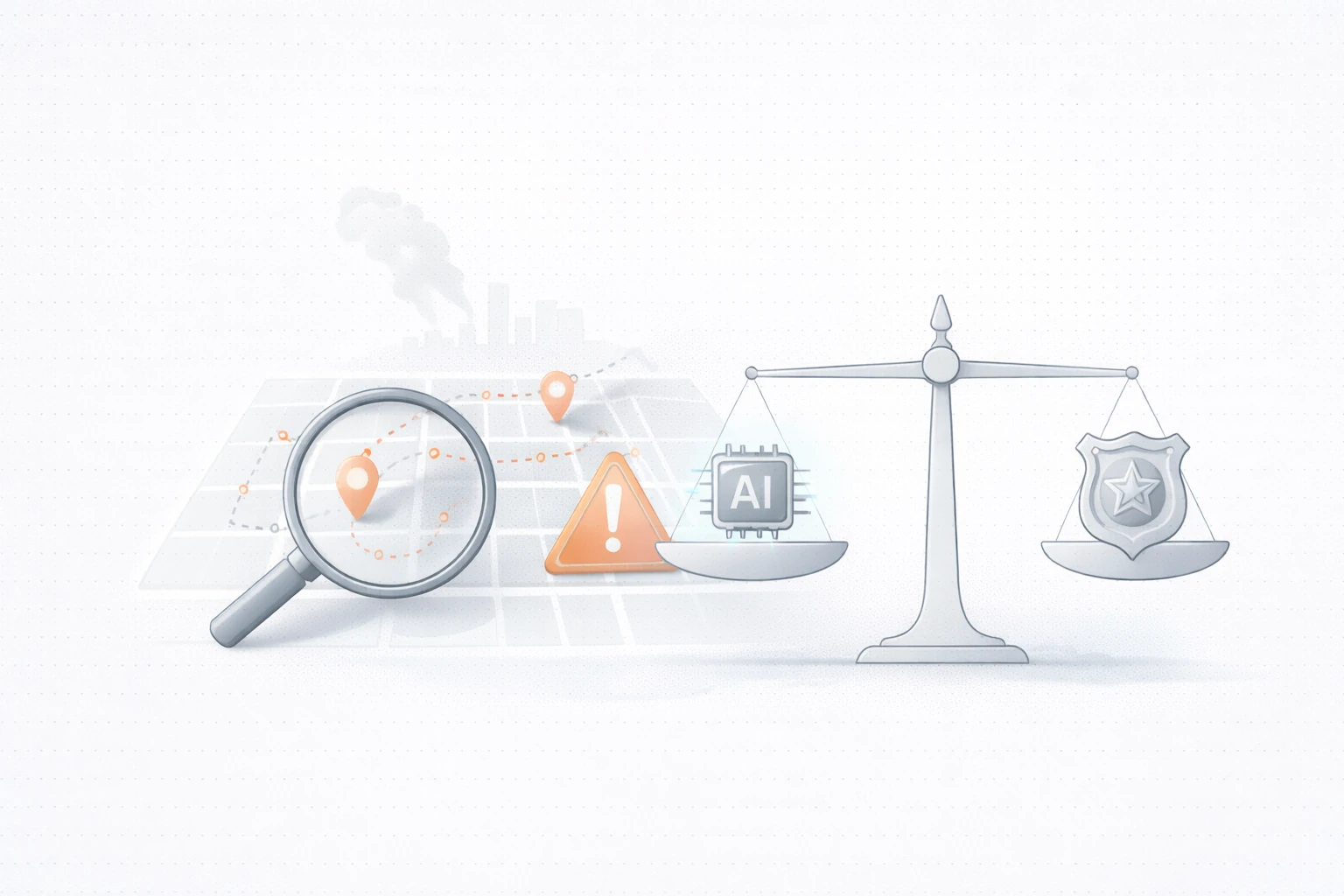
The Promise and Fear of Predictive Policing
In recent years, artificial intelligence has moved beyond research labs and consumer applications into one of the most sensitive areas of public life: law enforcement. Predictive policing systems, powered by data analytics and machine learning, promise to help police departments anticipate crime before it happens. Supporters argue that these tools can make communities safer, reduce response times, and allocate resources more efficiently. Critics, however, warn that predictive policing risks reinforcing bias, undermining civil liberties, and turning statistical patterns into self-fulfilling prophecies.
At its core, predictive policing raises a fundamental question: can data truly prevent crime, or does it merely reflect existing inequalities and assumptions? Unlike traditional policing methods that rely on observation and investigation after incidents occur, predictive systems attempt to forecast where crimes are likely to happen or who might be involved, using historical data and algorithms. This shift represents not only a technological change, but also a philosophical one, redefining how societies think about risk, prevention, and justice.
This article examines how predictive policing works, why it has gained traction, what benefits it claims to offer, and the serious ethical, legal, and social challenges it presents. More importantly, it explores whether AI-driven crime prediction can genuinely reduce crime, or whether its limitations and risks outweigh its promises.
What Is Predictive Policing and How Does It Work?
Predictive policing refers to the use of data analysis, statistical modeling, and AI techniques to identify patterns that suggest where crimes may occur or who may be involved in criminal activity. These systems typically rely on large datasets that include crime reports, arrest records, geographic information, and sometimes demographic or environmental data.
Machine learning algorithms analyze this information to detect correlations. For example, a system may identify that burglaries occur more frequently in certain areas at specific times, or that particular locations experience repeated incidents following similar patterns. Based on this analysis, police departments may deploy officers more heavily to predicted “hotspots” or monitor individuals flagged as high risk.
Many predictive policing tools focus on places rather than people. Hotspot policing models aim to concentrate patrols in areas where crime is statistically more likely. Other systems, sometimes referred to as person-based prediction, attempt to assess the likelihood that an individual may commit or become a victim of crime. These approaches differ in scope and risk, but both rely on the assumption that past data can meaningfully predict future behavior.
For an overview of how predictive policing technologies are designed and used, the Electronic Frontier Foundation provides a detailed analysis: https://www.eff.org/issues/predictive-policing
Why Law Enforcement Agencies Are Turning to AI
Police departments face increasing pressure to do more with limited resources. Budget constraints, rising urban populations, and public demand for safety have encouraged agencies to seek technological solutions. Predictive policing systems are often presented as tools that improve efficiency rather than replace human officers.
Supporters claim that AI can help law enforcement prioritize responses, reduce guesswork, and focus on prevention rather than reaction. In theory, this data-driven approach could reduce unnecessary patrols, lower crime rates, and minimize harm by intervening early. Some departments argue that predictive tools provide objective insights that reduce reliance on intuition or biased decision-making.
The appeal of predictive policing also lies in its alignment with broader trends in data-driven governance. Governments increasingly rely on analytics to guide decisions in healthcare, transportation, and public services. Law enforcement is seen as another domain where data can optimize outcomes.
However, the transition from theory to practice is far from simple.
The Illusion of Objectivity in Crime Data
One of the most common arguments in favor of predictive policing is that algorithms are neutral. Unlike humans, machines do not hold personal prejudices or emotions. Yet this argument overlooks a critical fact: AI systems learn from human-generated data.
Crime data does not represent all criminal activity equally. It reflects what has been reported, recorded, and enforced. Neighborhoods with heavier police presence naturally generate more crime reports, even if actual crime rates are similar elsewhere. Minor offenses may be disproportionately recorded in certain communities, while crimes in wealthier areas go underreported or handled informally.
When AI systems are trained on such data, they inherit its distortions. The algorithm may conclude that certain areas are more dangerous, not because more crime occurs there, but because more policing occurs there. This creates a feedback loop: increased patrols lead to more recorded incidents, reinforcing the system’s original prediction.
Researchers at the AI Now Institute have extensively documented how predictive policing systems can reproduce structural bias: https://ainowinstitute.org/issues/policing.html
Bias, Discrimination, and Social Consequences
Predictive policing raises serious concerns about fairness and discrimination. Studies have shown that some predictive systems disproportionately target marginalized communities, particularly racial and ethnic minorities. This is not always the result of explicit design choices, but rather of historical inequalities embedded in the data.
When police concentrate patrols in predicted hotspots, residents of those areas experience increased surveillance, more frequent stops, and a higher likelihood of arrest for minor offenses. This can erode trust between communities and law enforcement, making cooperation more difficult and exacerbating social tensions.
Individual-based prediction systems are even more controversial. Labeling someone as high risk based on statistical correlations raises ethical questions about presumption of innocence. People may face increased scrutiny not because of actions they have taken, but because of patterns associated with others who share similar characteristics.
The American Civil Liberties Union has raised significant concerns about these practices: https://www.aclu.org/issues/privacy-technology/surveillance-technologies/predictive-policing
Can Predictive Policing Actually Reduce Crime?
The central claim of predictive policing is that it prevents crime. Evidence for this claim is mixed. Some studies suggest that hotspot policing can reduce certain types of crime in specific areas, at least temporarily. Others find little to no long-term impact, or note that crime simply shifts to nearby locations rather than disappearing.
One challenge is that crime is influenced by complex social factors such as poverty, education, housing stability, and mental health. Algorithms that focus on patterns in crime data often ignore these broader causes. As a result, predictive systems may treat symptoms rather than addressing root problems.
Moreover, measuring success is difficult. If a predicted crime does not occur, it is unclear whether the system prevented it or whether it would not have happened anyway. This ambiguity makes it hard to evaluate effectiveness objectively.
The National Institute of Justice has published research highlighting the limitations of predictive policing outcomes: https://nij.ojp.gov/topics/articles/predictive-policing-what-it
Transparency and Accountability Challenges
Another major issue is transparency. Many predictive policing systems are developed by private companies that treat their algorithms as proprietary. Police departments may use these tools without fully understanding how predictions are generated.
This lack of transparency creates accountability gaps. If a predictive system leads to harm, who is responsible? The software vendor, the police department, or the officers who followed the recommendation? Without clear explanations, affected individuals have little ability to challenge decisions or seek redress.
Transparency is essential not only for accountability, but also for public trust. Communities are more likely to accept new technologies if they understand how they work and how they are governed.
Organizations such as the Center for Policing Equity argue that meaningful oversight is critical: https://policingequity.org
Legal and Constitutional Implications
Predictive policing also raises legal questions, particularly in countries with strong protections for individual rights. Increased surveillance and data-driven suspicion may conflict with constitutional guarantees related to privacy, due process, and equal protection under the law.
In some cases, predictive tools rely on data collected without explicit consent or clear legal frameworks. The use of personal information to infer future criminal behavior challenges traditional legal standards that require evidence of specific actions rather than statistical risk.
Courts have begun to grapple with these issues, but legal standards have not kept pace with technological change. This legal uncertainty further complicates the adoption of predictive policing systems.
Human Judgment Versus Algorithmic Prediction
Despite the sophistication of AI systems, they cannot fully replace human judgment. Algorithms lack contextual understanding, moral reasoning, and empathy. They do not understand intent, social dynamics, or the lived experiences of individuals.
Effective policing requires discretion, communication, and community engagement. When officers rely too heavily on algorithmic predictions, there is a risk that judgment becomes automated rather than informed. Ethical policing depends on human responsibility, not statistical probability alone.
Many experts argue that AI should serve as a support tool rather than a decision-maker. Human oversight is essential to interpret predictions critically and consider broader implications.
Toward Responsible Use of Predictive Policing
If predictive policing is to play a role in modern law enforcement, it must be implemented responsibly. This includes rigorous evaluation, transparency, community involvement, and clear limitations on use.
Responsible practices may include independent audits, public reporting, bias testing, and clear rules governing data collection and use. Importantly, predictive tools should complement social investment in education, housing, and mental health services rather than replace them.
Crime prevention is ultimately a social challenge, not just a technical one.
Rethinking Prevention in the Age of AI
Predictive policing reflects a broader societal desire to manage uncertainty through data. While AI can reveal patterns and support decision-making, it cannot eliminate the complexity of human behavior. Crime is shaped by social conditions that algorithms alone cannot fix.
The question is not whether data can help law enforcement, but how it should be used. Without careful design and oversight, predictive policing risks deepening the very problems it seeks to solve. With thoughtful governance, it may offer limited benefits as part of a broader, human-centered approach to public safety.
Final Thoughts: Can Data Prevent Crime?
Data can inform, but it cannot replace judgment, ethics, and accountability. Predictive policing offers tools, not solutions. Whether it prevents crime depends less on algorithms and more on how societies choose to use them.
If predictive systems are treated as neutral authorities, they may reinforce inequality and undermine trust. If they are treated as limited tools, guided by human values and transparent governance, they may support more informed decision-making.
Ultimately, the future of predictive policing is not a technical question, but a moral one.
By Sami Hayes – AIchronicle Insights