
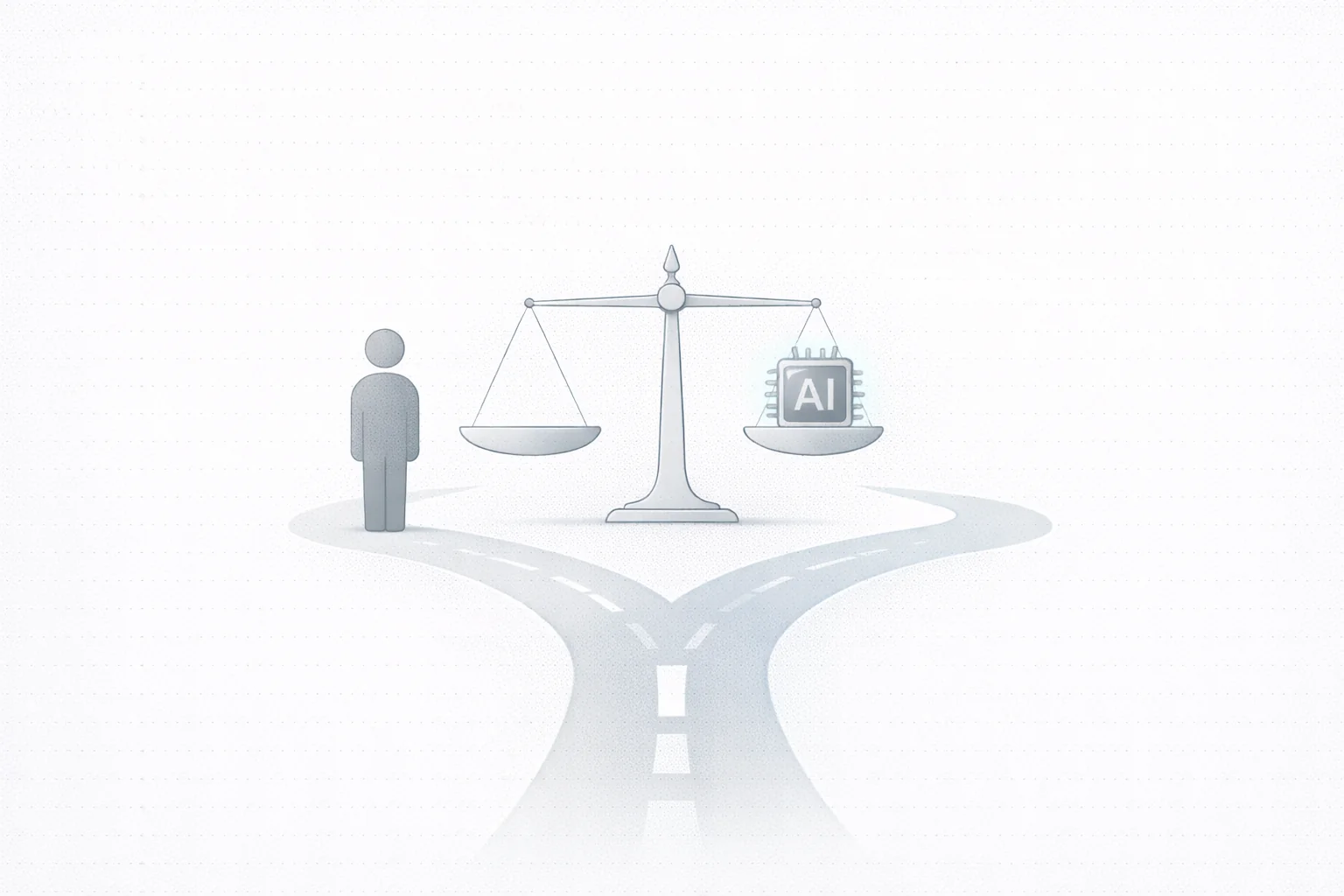
The Rise of Algorithmic Advice
Artificial intelligence has become deeply embedded in modern decision-making. From recommending what movie to watch to suggesting medical diagnoses or financial investments, AI systems increasingly offer guidance in areas once dominated exclusively by human judgment. These systems analyze vast datasets, identify patterns, and generate recommendations with remarkable speed and consistency.
As AI advice becomes more accessible and persuasive, a critical question emerges: Should humans always trust AI recommendations, or are there domains where human judgment remains superior?
This article explores the tension between AI-driven advice and human decision-making. It examines the strengths and limitations of both, identifies areas where humans still outperform machines, and explains why a balanced approach is essential in an AI-driven society.
2. Understanding AI Advice and Human Judgment
2.1 What Is AI Advice?
AI advice refers to recommendations generated by algorithms trained on historical data. These systems rely on machine learning models, statistical analysis, and pattern recognition to predict outcomes or suggest actions.
Common examples include:
• Recommendation systems on streaming platforms
• Automated credit scoring
• AI-powered medical diagnostics
• Hiring and resume-screening tools
• Financial forecasting software
AI advice is valued for its speed, scalability, and ability to process large volumes of information beyond human capacity.
2.2 What Is Human Judgment?
Human judgment involves reasoning shaped by experience, intuition, ethics, emotions, and contextual understanding. Unlike AI, humans can weigh intangible factors, interpret ambiguous situations, and reflect on moral implications.
Human judgment is influenced by:
• Personal experience
• Cultural norms
• Emotional intelligence
• Ethical reasoning
• Situational awareness
These qualities allow humans to make decisions in complex, uncertain, or emotionally charged environments.
3. The Strengths of AI Advice
3.1 Consistency and Objectivity
AI systems apply the same rules uniformly. They do not suffer from fatigue, mood swings, or emotional bias in the traditional sense. This consistency is particularly valuable in repetitive tasks and large-scale evaluations.
For example, AI can analyze thousands of loan applications using identical criteria, reducing arbitrary variations that may occur with human evaluators.
3.2 Data Processing at Scale
AI excels at analyzing massive datasets quickly. In fields such as climate modeling, genomics, and market analysis, AI uncovers patterns that would be impossible for humans to detect manually.
According to research published by Nature, machine learning models have demonstrated superior performance in image recognition and pattern detection tasks when trained on large, high-quality datasets.
https://www.nature.com/articles/d41586-018-03095-6
3.3 Speed and Efficiency
AI advice is delivered almost instantly. In time-sensitive scenarios—such as fraud detection or emergency logistics—this speed can be critical.
4. The Limits of AI Advice
Despite its strengths, AI advice has significant limitations that prevent it from fully replacing human judgment.
4.1 Lack of Contextual Understanding
AI systems operate within predefined parameters. They struggle to interpret nuance, sarcasm, cultural context, or unique circumstances not represented in training data.
A recommendation may be statistically sound yet practically inappropriate because the system lacks situational awareness.
4.2 Data Bias and Historical Inequality
AI learns from historical data, which often reflects social biases. When these biases go unchecked, AI advice can perpetuate discrimination rather than eliminate it.
A well-documented example is biased facial recognition systems, which have shown higher error rates for certain demographic groups.
https://www.brookings.edu/articles/facial-recognition-technology-can-perpetuate-racial-bias
4.3 Absence of Moral Reasoning
AI does not possess ethical judgment. It cannot evaluate whether a recommendation is morally right or socially acceptable unless explicitly programmed to follow ethical constraints.
This limitation is particularly concerning in areas such as criminal justice, healthcare prioritization, and military applications.
5. Domains Where Human Judgment Remains Superior
5.1 Ethical and Moral Decision-Making
Ethical decisions involve values, empathy, and social responsibility. While AI can model ethical frameworks, it cannot genuinely understand moral consequences.
In medical ethics, for example, deciding how to allocate limited resources during a crisis requires compassion, transparency, and moral accountability—qualities that cannot be fully automated.
The World Health Organization emphasizes the importance of human oversight in AI-assisted healthcare decisions.
https://www.who.int/publications/i/item/WHO-2019-nCoV-AI-2021.1
5.2 Creative and Strategic Thinking
AI can generate ideas by recombining existing patterns, but true creativity involves originality, intention, and vision. Strategic decisions often require imagining futures that do not yet exist.
Human leaders excel at:
• Defining long-term goals
• Navigating uncertainty
• Adapting to unexpected change
These abilities remain difficult for AI to replicate.
5.3 Emotional and Social Intelligence
Human judgment is shaped by emotional awareness. Understanding how decisions affect relationships, trust, and morale is essential in leadership, education, and counseling.
AI may detect sentiment in text, but it does not experience empathy or emotional responsibility.
6. Case Studies: When AI Advice Fails Without Human Judgment
6.1 Healthcare Misdiagnosis
AI diagnostic tools can assist doctors by highlighting potential conditions. However, studies have shown that over-reliance on automated recommendations can lead to diagnostic errors when clinicians fail to question AI outputs.
Research published in The BMJ highlights the importance of clinical judgment in interpreting AI-generated medical advice.
https://www.bmj.com/content/368/bmj.m689
6.2 Algorithmic Hiring Decisions
Automated hiring tools may rank candidates efficiently, but they often fail to account for unconventional career paths, personal growth, or contextual achievements.
Human interviewers can recognize potential that algorithms overlook.
—
7. The Psychological Impact of AI Advice on Humans
7.1 Automation Bias
Automation bias occurs when humans trust AI recommendations too readily, even when those recommendations are flawed.
This phenomenon can reduce critical thinking and increase dependency on automated systems.
7.2 Erosion of Confidence in Personal Judgment
Excessive reliance on AI advice may weaken individuals’ confidence in their own decision-making abilities, especially among younger generations raised alongside algorithmic guidance.
Maintaining decision-making autonomy is essential for long-term cognitive resilience.
8. Toward a Balanced Model: Human-in-the-Loop Systems
8.1 Complementary Strengths
The most effective approach combines AI efficiency with human judgment. In human-in-the-loop systems:
• AI provides data-driven insights
• Humans evaluate context and ethics
• Final decisions remain human-controlled
This model is increasingly adopted in healthcare, finance, and aviation.
8.2 Responsible AI Design
Designing AI systems that encourage human oversight is critical. Transparency, explainability, and accountability must be prioritized.
The European Commission outlines these principles in its guidelines for trustworthy AI.
https://digital-strategy.ec.europa.eu/en/policies/european-approach-artificial-intelligence
9. Education and AI Literacy as Safeguards
9.1 Teaching Critical AI Use
AI literacy enables individuals to understand the limitations of algorithmic advice. Educated users are more likely to question recommendations and apply independent judgment.
9.2 Preparing Future Decision-Makers
Educational institutions must emphasize:
• Critical thinking
• Ethical reasoning
• Digital literacy
These skills ensure that future professionals use AI responsibly rather than passively.
Choosing Wisdom Over Convenience
AI advice is a powerful tool, but it is not a substitute for human judgment. While algorithms excel at analyzing data and providing consistent recommendations, they lack moral reasoning, emotional intelligence, and contextual understanding.
Human judgment remains essential in ethical dilemmas, creative strategy, leadership, and social decision-making. The future does not belong to AI alone, nor to humans resisting technology, but to thoughtful collaboration between the two.
By recognizing where AI advice is helpful and where human judgment is irreplaceable, society can harness technology without surrendering responsibility. The goal is not to choose between AI and humans, but to ensure that people remain accountable for the choices that shape their lives and communities.
By Sami Hayes – AIchronicle Insights


Pingback: The High Cost of Convenience: AI Fatigue and the Rise of Cognitive Bankruptcy in 2026 - AIchronicle