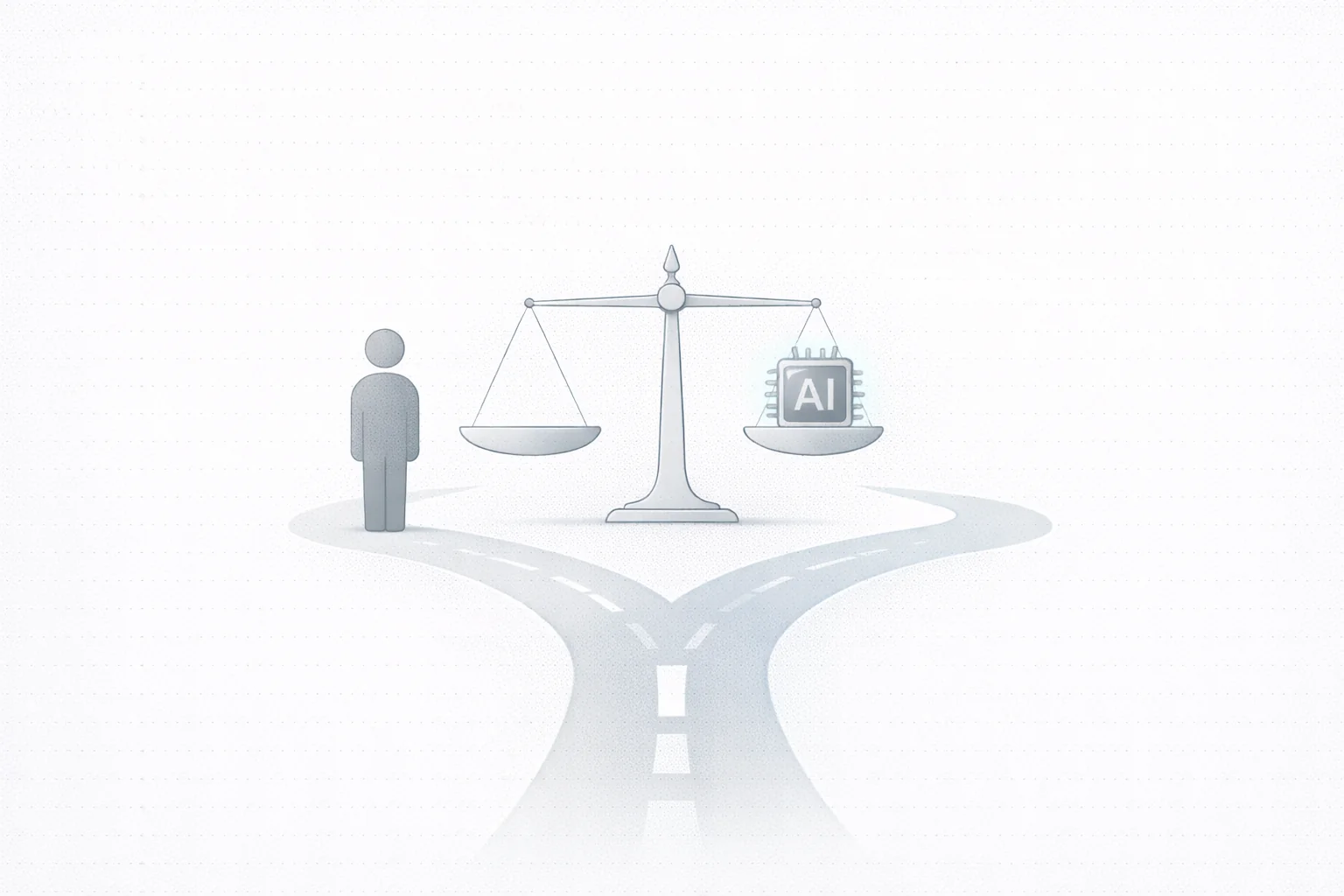
Why Skills Matter More Than Job Titles
The global job market is changing faster than at any point in modern history. Artificial intelligence is not just automating tasks; it is reshaping entire professions, redefining how work is done, and challenging traditional ideas about job security. Many roles that once seemed stable are evolving, while new opportunities are emerging that did not exist a decade ago.
This shift has created anxiety and confusion. Headlines often focus on jobs that AI might replace, but far less attention is given to what truly determines long-term success in an AI-driven economy: skills. Job titles may change, tools may evolve, and technologies may advance, but adaptable skills remain the foundation of employability.
In an AI-driven job market, the most valuable workers are not those who resist change, nor those who rely entirely on automation. Instead, they are individuals who understand how to work alongside AI, apply human judgment where machines fall short, and continuously develop skills that remain relevant regardless of technological shifts.
This essay explores the real skills people need to thrive in an AI-driven job market. It focuses on practical, transferable abilities rather than hype, emphasizing what employers value today and what will matter even more in the future.
Understanding How AI Is Changing Work
Before discussing skills, it is important to understand how AI is actually transforming the workplace.
AI systems excel at processing large amounts of data, recognizing patterns, and performing repetitive or rule-based tasks. As a result, many routine activities across industries are becoming automated. This includes tasks in administration, data entry, customer support, marketing, logistics, and even parts of professional fields like law and medicine.
However, AI does not eliminate the need for humans. Instead, it changes what humans are expected to contribute. Work is shifting away from manual execution and toward oversight, interpretation, creativity, and decision-making.
According to the World Economic Forum, the future of work will emphasize skills that machines cannot easily replicate, such as critical thinking, emotional intelligence, and adaptability.
Source: https://www.weforum.org/reports/the-future-of-jobs-report
Understanding this shift helps clarify why certain skills are becoming essential while others are losing relevance.
Critical Thinking and Problem-Solving
One of the most important skills in an AI-driven job market is critical thinking.
AI can provide answers, predictions, and recommendations, but it cannot fully evaluate context, ethical implications, or long-term consequences. Humans are still needed to interpret AI outputs, question assumptions, and make informed decisions.
Why Critical Thinking Matters
Critical thinking enables individuals to:
• Evaluate the reliability of AI-generated information
• Identify errors or biases in automated systems
• Decide when to trust AI and when to override it
• Solve complex problems without clear rules
As AI tools become more accessible, the ability to think independently becomes more valuable, not less.
Real-World Examples
In business, AI might suggest a pricing strategy based on data, but a human must assess market conditions, brand reputation, and customer perception.
In healthcare, AI can analyze medical images, but doctors must interpret results within the broader context of patient history and ethical responsibility.
Critical thinking ensures that AI serves as a tool rather than an unquestioned authority.
Digital Literacy Beyond Basic Technology Use
Digital literacy today means far more than knowing how to use a computer or smartphone.
In an AI-driven job market, digital literacy includes understanding how AI systems work at a basic level, what they can and cannot do, and how to use them responsibly.
Key Elements of Modern Digital Literacy
• Understanding AI limitations
• Knowing how data is collected and used
• Recognizing algorithmic bias
• Using digital tools efficiently
• Protecting personal and organizational data
Digital literacy empowers workers to collaborate effectively with AI rather than being intimidated by it.
The OECD emphasizes that digital literacy is essential for employability in modern economies.
Source: https://www.oecd.org/education/skills-beyond-school/technology-and-the-future-of-work.htm
Communication Skills in an Automated World
As technical tasks become automated, communication becomes increasingly important.
AI can generate text, summarize information, and automate responses, but it cannot replace genuine human communication, especially in complex or emotionally sensitive situations.
Why Communication Skills Are More Valuable Than Ever
Effective communication helps individuals:
• Explain ideas clearly to diverse audiences
• Collaborate across teams and cultures
• Resolve conflicts
• Build trust with clients and colleagues
• Translate technical information into practical insights
In many roles, the ability to communicate clearly and persuasively is what distinguishes human value from machine efficiency.
Human Communication vs AI Output
AI can produce grammatically correct text, but humans provide:
• Contextual understanding
• Emotional awareness
• Persuasion and empathy
• Ethical consideration
Strong communication skills allow professionals to use AI-generated content as a starting point while adding meaningful insight.
Creativity and Innovation
Creativity remains one of the most resilient human skills in an AI-driven job market.
While AI can generate designs, music, and text, it relies on existing data and patterns. True innovation often comes from human curiosity, intuition, and the ability to imagine possibilities beyond historical trends.
Why Creativity Cannot Be Fully Automated
Creativity involves:
• Original thinking
• Emotional expression
• Cultural understanding
• Risk-taking
• Vision beyond data
AI can assist creative processes, but humans define purpose, meaning, and direction.
Creativity in Non-Creative Jobs
Creativity is not limited to artists or designers. It plays a role in:
• Business strategy
• Problem-solving
• Product development
• Marketing campaigns
• Process improvement
In an AI-driven economy, creativity is what drives differentiation and growth.
Emotional Intelligence and Human-Centered Skills
Emotional intelligence is becoming increasingly important as automation handles technical tasks.
Emotional intelligence includes the ability to understand emotions, manage relationships, and respond empathetically to others.
Why Emotional Intelligence Matters
AI lacks genuine emotional awareness. Humans are needed to:
• Lead teams
• Motivate employees
• Handle customer concerns
• Navigate workplace dynamics
• Make ethical decisions
Jobs that require trust, leadership, and interpersonal interaction are among the most resilient to automation.
According to Harvard Business Review, emotional intelligence is a key predictor of leadership success in modern organizations.
Adaptability and Lifelong Learning
In an AI-driven job market, the ability to learn continuously is more important than mastering a single skill.
Technologies evolve rapidly, and job requirements change accordingly. Workers who remain adaptable are better positioned to navigate these shifts.
Characteristics of Adaptable Professionals
• Willingness to learn new tools
• Openness to change
• Ability to unlearn outdated practices
• Curiosity and self-motivation
Lifelong learning is no longer optional; it is a necessity.
Online learning platforms, micro-credentials, and professional development programs play a crucial role in helping individuals stay relevant.
Ethical Awareness and Responsibility
As AI becomes more integrated into decision-making, ethical awareness becomes a critical skill.
Employees and leaders must understand the ethical implications of AI use, including issues related to fairness, transparency, and accountability.
Why Ethics Matter in AI-Driven Workplaces
Ethical awareness helps individuals:
• Identify biased systems
• Protect user privacy
• Ensure responsible data use
• Build trust with stakeholders
Organizations increasingly value professionals who can navigate ethical challenges alongside technological innovation.
The European Commission highlights ethical AI as a cornerstone of sustainable digital transformation.
Source: https://digital-strategy.ec.europa.eu/en/policies/european-approach-artificial-intelligence
Collaboration Between Humans and AI
The future of work is not about humans versus machines. It is about collaboration.
Workers who understand how to integrate AI into their workflows gain a significant advantage.
Skills for Effective Human-AI Collaboration
• Knowing when to delegate tasks to AI
• Verifying AI outputs
• Combining data-driven insights with human judgment
• Designing workflows that maximize efficiency
This collaboration allows organizations to achieve better outcomes while maintaining human oversight.
Domain Expertise Still Matters
Despite automation, deep knowledge in specific fields remains valuable.
AI tools enhance expertise, but they do not replace understanding. Professionals who combine domain knowledge with AI literacy are especially valuable.
Examples include:
• Doctors using AI diagnostics
• Lawyers using legal research tools
• Marketers using predictive analytics
• Engineers using simulation software
Expertise gives context and meaning to AI outputs.
The Role of Soft Skills in Career Longevity
Soft skills, often undervalued in the past, are now central to career longevity.
These include:
• Time management
• Decision-making
• Conflict resolution
• Leadership
• Ethical reasoning
As technical skills become easier to automate, soft skills define human contribution.
—
Preparing for the Future Job Market
Preparing for an AI-driven job market requires proactive effort.
Individuals should focus on:
• Developing transferable skills
• Staying informed about industry trends
• Practicing ethical decision-making
• Embracing continuous learning
Governments, educational institutions, and employers also play a role in supporting workforce adaptation.
Conclusion: Skills, Not Fear, Will Shape the Future
The rise of artificial intelligence does not signal the end of human work. Instead, it marks a transformation in how work is defined and valued.
The real skills people need in an AI-driven job market are not purely technical. They are human-centered, adaptable, and rooted in critical thinking, creativity, emotional intelligence, and ethical responsibility.
AI will continue to evolve, but human skills will remain essential. Those who invest in learning, adaptability, and thoughtful collaboration with technology will not only survive but thrive in the future of work.
The challenge is not whether AI will change jobs. It already has. The real question is whether individuals are prepared to develop the skills that matter most in this new era.
By Sami Hayes – AIchronicle Insights